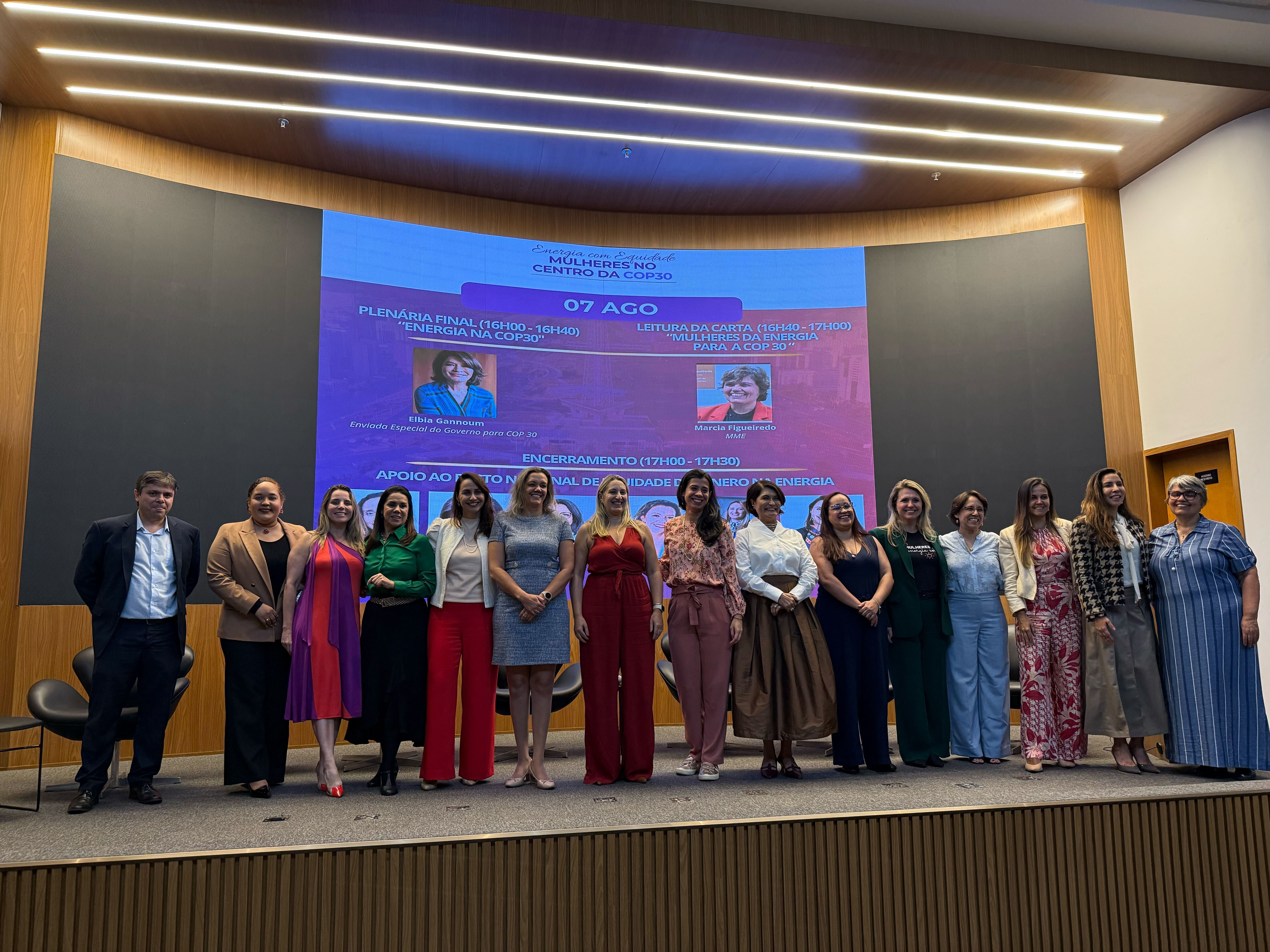
August 12, Brasília | As part of Brazil's growing mobilisation toward COP30, the Global Wind...
Progressing Women In The Decade Of Change
Women In Wind
Advancing the role of women as agents of change in society and promote best practices within the wind industry.
Building an Inclusive Wind Industry
The Women in Wind Global Leadership Programme is evolving to become a broader platform for advancing diversity, inclusion and leadership across the global wind energy sector. As the industry continues to grow and play a critical role in the clean energy transition, fostering diverse talent and inclusive leadership is essential to building a stronger, more innovative workforce.
Our Vision
A wind energy future powered by the limitless potential of diversity and inclusion.
Our Mission
To unite industry stakeholders in propelling gender diversity by providing women equal opportunities to learn, lead and succeed at every level.
Through leadership development, mentorship, networking and collaboration, Women In Wind brings together individuals and organisations committed to creating lasting change. By supporting women at every stage of their careers and working with industry partners to champion inclusive workplaces, Women in Wind is helping to shape a future where diverse perspectives drive innovation, strengthen businesses and accelerate the global energy transition.

What's Next?
The 5-Year Impact Report has illuminated an important insight: while the first five years have been tremendously effective in delivering on the initiative’s promise, its best days still lie ahead.
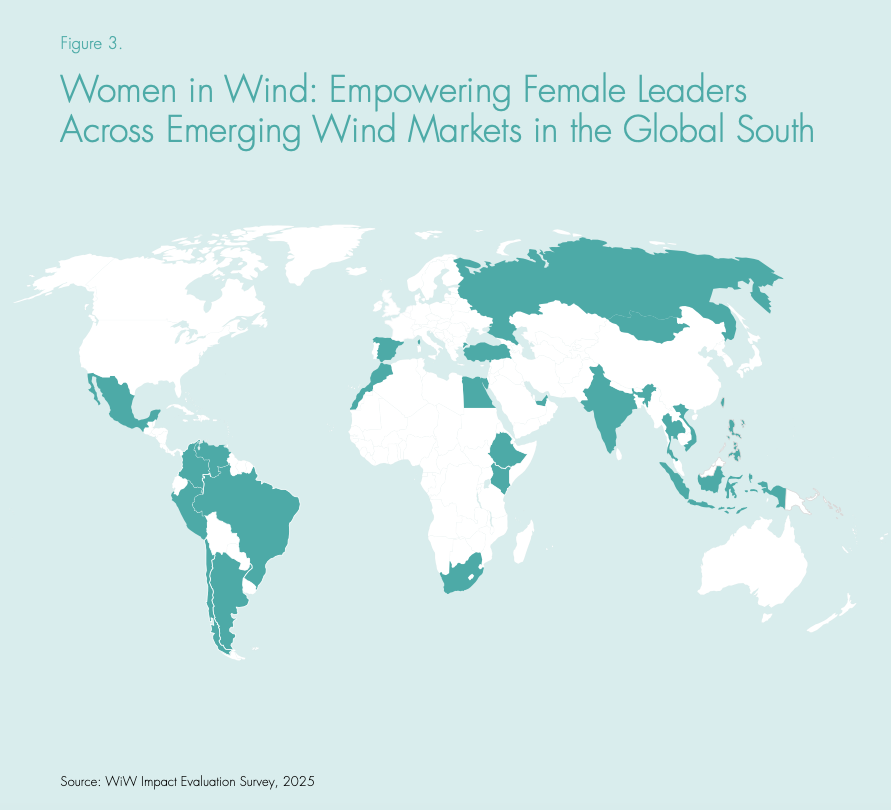
Going from strength to strength, WiW is now considering scaling strategies so that more women in more markets can benefit from the program’s offerings. The Impact Report has concluded that considerations such as regionalizing program delivery be discussed, in addition to new focus areas such as tailored corporate partnerships and enhanced mentee employer engagement.
A groundbreaking initiative in the wind sector, the Women in Wind Global Leadership Program is making a unique and profound impact in the lives of mentees. There is no doubt that the program has proven itself to be effective in its first five years and any challenges in delivering the program at greater scale globally are solvable. We believe the long-term benefits to the program’s growth will be well worth the effort – for individual women, for
companies across the wind sector, and for societies at large.

Global Ambassadors
Women in Wind strives to represent the voices of women working in the wind energy industry on a global scale. Our Global Ambassadors are drawn from industry associations around the world, ensuring that they represent the interests of the sector on a national scale.
Global Ambassadors are industry champions of diversity and sustainability, who work in the wind energy sector in their respective countries. They serve as focal points for national communications, strategy and initiatives on gender diversity in wind energy, as well as contact points on this agenda for the public sector, private sector and media. Their representation helps to positively influence the national understanding of gender diversity in energy, and encourage more inclusive work cultures and environments.
Global Ambassadors also collaborate on shared initiatives, in service of a common goal to create a more sustainable future through a more inclusive clean energy sector. Global Ambassadors are not required to identify as women.
[Global Ambassadors to be updated soon]

Advocating For The Interests Of Women Working In Energy
The following associations also actively advocate for the interests of women working in energy and/or greater gender diversity in clean energy.
National Associations
-
Argentina: AMES (Asociación de Mujeres en Energías Sustentables de Argentina)
-
Australia: Women in Renewables (Clean Energy Council); Women in Energy
-
Canada: WiRE (Women in Renewable Energy)
-
Germany: Women of Wind Energy Germany
-
India: WiS (Women in Sustainability)
-
Mexico: Red Mujeres (Red Mujeres en Energía Renovable y Eficiencia Energética)
-
South Africa: WeConnect RESA
-
Turkey: TWRE (Turkish Women in Renewable and Energy)
-
UAE: WiSER (Women in Sustainability, Environment and Renewable Energy)
-
UK: POWERful Women
-
US: WICS (Women in Cleantech and Sustainability)
-
US: WRISE (Women of Renewable Industries and Sustainable Energy)
International Associations
- Global: Equal by 30
- Global: GWNET (Global Women’s Network for the Energy Transition)
- Global: The Hawthorn Club
- Africa and Asia: ENERGIA (International Network on Gender and Sustainable Energy)
- Nordic: NEEN (Nordic Energy Equality Network)
Energy Security News Tracker
Find the latest reads on energy security from the world's media here.
Latest articles
22 July, 2025
What We’ve Learned: Lessons from the Field of Wind Energy
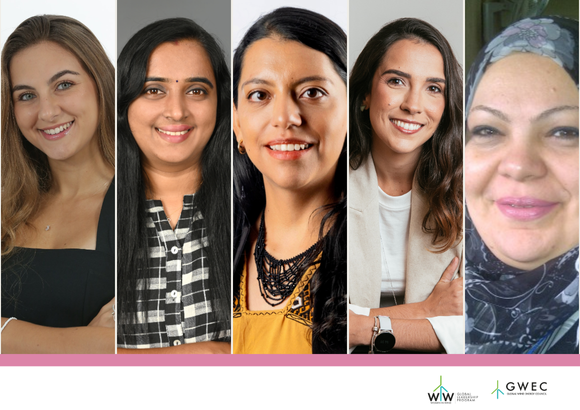
Left to right: Sophia Saldanha Biondi Assumpção, Sasirekha Murugan, Samantha Beatriz Carmona...

02 July, 2025
Powering Purpose: Personal Journeys into Wind Energy
Left to right: Alisha Raghoonanan, Juliana Diniz, Shanthini Madras Sambandan, America Zelada Leon,...
Contacts

.png?width=875&height=570&name=Untitled%20design%20(7).png)
Global Wind Industry Statement on Green Recovery
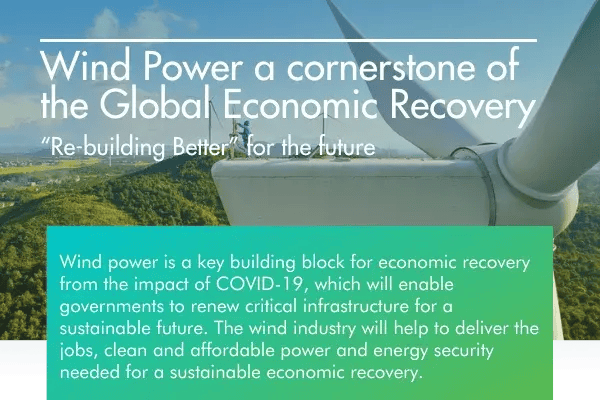
In May 2020, the global wind industry, representing 98% of the total global wind power installed capacity, published a statement highlighting how wind power can support a green recovery, and outlining key policy recommendations to maximise the socioeconomic benefits of wind power across the world.
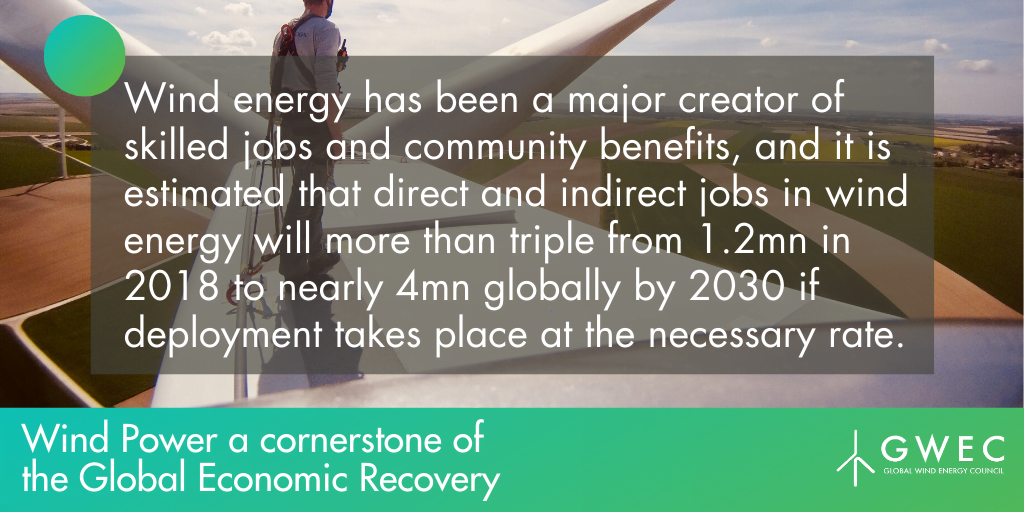
Wind power is a key building block for economic recovery trom the impact of COVID-19, which will enable governments to renew critical infrastructure for a sustainable future. The wind industry will help to deliver the jobs, clean and affordable power and energy security needed for a sustainable economic recovery.
Download the statement in 9 different languages!
Policy Recommendations
A robust policy framework is key to accelerating wind power growth at the necessary levels to meet Paris-compliant decarbonisation scenarios. Policy is also critical to realising the environmental and socioeconomic benefits of wind power, including job creation, local investment, development of critical infrastructure, public health savings, energy security and much more.
Discover our policy recommendations below.
Policy Recommendations
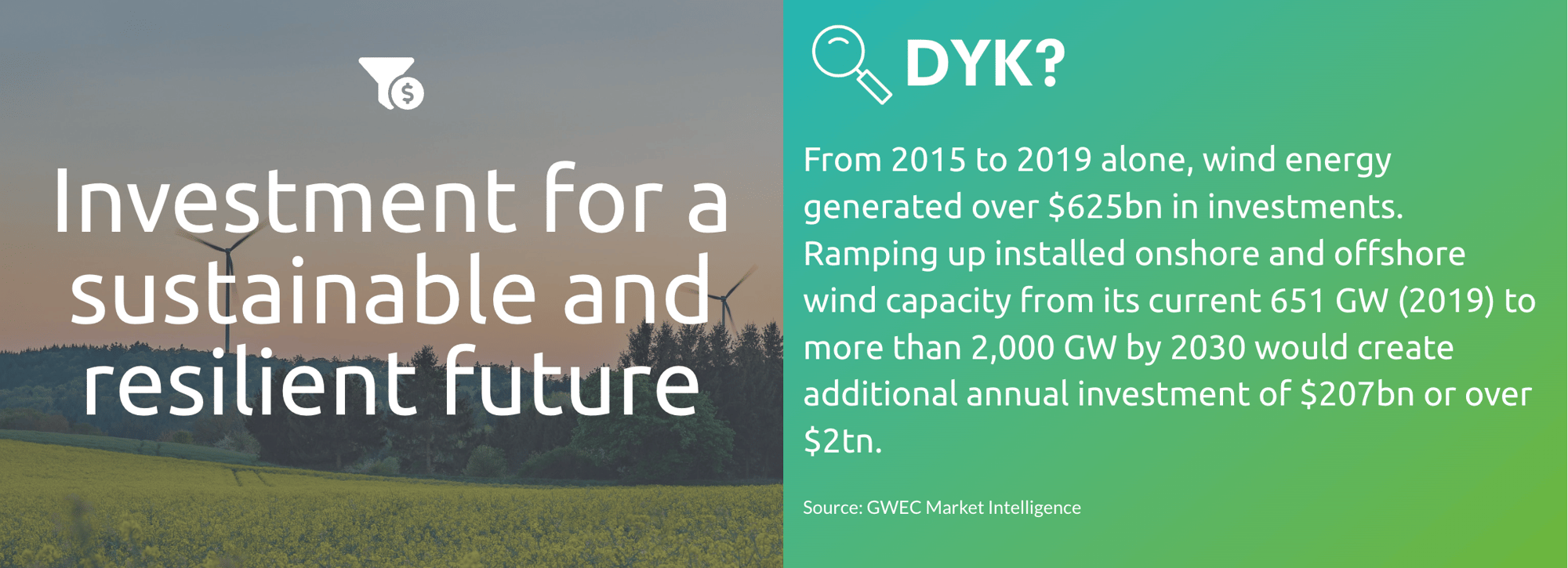
Introduce meaningful carbon pricing on an international basis and promote a level playing field across energy sources to allow the accelerated deployment of renewables and electrification of sectors such as transport, heating and cooling and industry.
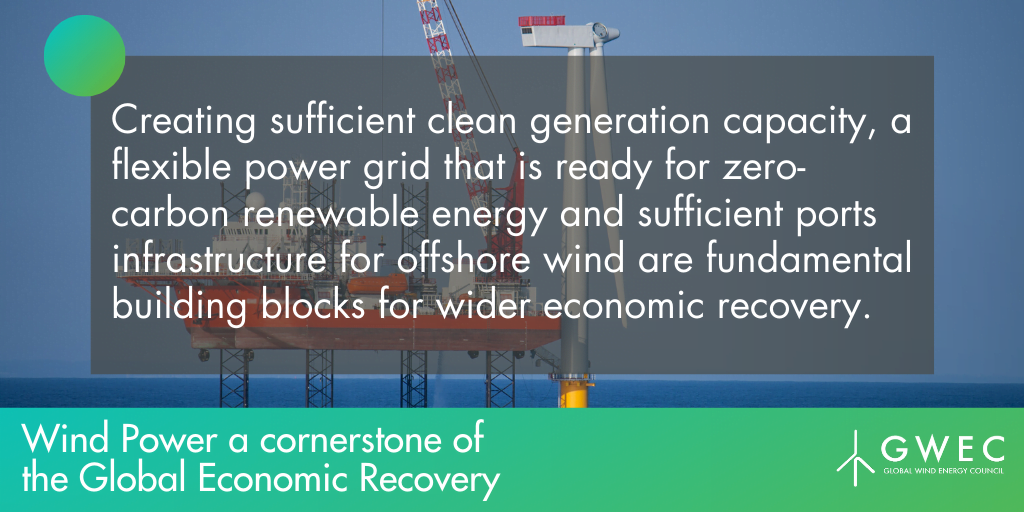
Ensure that adequate investment flows towards critical infrastructure, including power systems and grid infrastructure, at a low cost of finance and with adherence to sustainability standards.
Provide strong support for innovation and R&D programs in order to allow the accelerated deployment of the next generation of wind turbine platforms.
Introduce clear criteria that investment schemes for public and private bodies are built upon the principle of “No Harm” for society and the environment.
Implement evidence-based decision-making for government-backed investment, guided by metrics such as impact on GDP, envrionmental impact, resource depletion, social value and system resilience.
Safeguard institutional and multilateral lending and relief funds by instituting reporting requirements for sustainability and climate-related disclosures, in line with the recommendations of the Task Force on Climate-related Financial Disclosures.
Move swiftly to scale-up green financing for emerging markets and developing economies, which are facing accelerated capital flight and growing debt that hinders their clean energy transition.
Three of New York City’s five public employee pension funds voted to divest $4 billion from securities related to fossil-fuel companies.
The latest Task Force on Climate-related Financial Disclosures (TCFD) status report, dated October 2020, highlights the need for greater transparency and climate-related disclosures. The report also shows that energy companies are leading on disclosure, with an average level of TCFD-aligned disclosures of 40% for energy companies in 2019.
Source: https://assets.bbhub.io/company/sites/60/2020/10/TCFD-2020-Status-Report-Press-Release_FINAL.pdf
In light of the financial resources required to combat COVID-19, the IMF approved a six-month tranche of debt service relief for 25 member countries in April 2020, followed by a second six-month tranche of relief in October 2020. The World Bank Group and IMF have urged G20 countries to establish a Debt Service Suspension Initiative.
Source: https://www.imf.org/en/News/Articles/2020/10/02/pr20304-imf-executive-board-extends-immediate-debt-service-relief-28-eligible-lics-six-months; https://www.worldbank.org/en/topic/debt/brief/covid-19-debt-service-suspension-initiative
In November 2020, the NSW Government in Australia announced it would allocate $32 billion to invest in renewable energy infrastructure over the next decade, which will deliver around 12 GW of new transmission capacity, 3 GW of new renewable energy capacity, generate 9,100 jobs, as well as help save households an average of $130 on their electricity bills each year.
Source: https://energy.nsw.gov.au/government-and-regulation/electricity-infrastructure-roadmap
The South African Wind Energy Association (SAWEA) is pushing for a green economic recovery plan, which should consider renewable energy as one of the main components of the government economic stimulus package post-COVID-19.
The Canadian government’s Large Employer Emergency Financing Facility (LEEFF) provides bridge financing to companies with revenues in excess of $300 million a year, with recipient companies required to commit to publishing annual climate-related disclosure reports consistent with the Financial Stability Board’s Task Force on Climate-related Financial Disclosures, including how their future operations will support environmental sustainability and national climate goals.
“Investment in offshore wind expected to show strong growth” – IEA: World Energy Investment, 2021
“$465 Million to Expand Energy Access and Renewable Energy Integration in West Africa” World Bank Group, 2021
“Delivering on the $100 billion climate finance commitment and transforming climate finance.” Independent Expert Group on Climate Finance UNFCCC. December 2020
“Consultation Document.” Taskforce on Voluntary Carbon Markets. November 2020
“COVID-19 Recovery Package Analyses.” Global Renewables Congress. 2021.
“Aligning Stimulus with Energy Transformation.” Wärtsilä. October 2020.
“Will COVID-19 fiscal recovery packages accelerate or retard progress on climate change?” Hepburn, C., O’Callaghan, B., Stern, N., Stiglitz, J., and Zenghelis, D. (2020), Smith School Working Paper 20-02.
“Beyond Crisis: Renewable Energy for a Low-carbon Future.” IRENA. 2020.
“Report: Green recovery plans boost income, employment and GDP.” We Mean Business Coalition. October 2020.
“Making the green recovery work for jobs, income and growth.” OECD. October 2020.
“Green Finance Strategies for Post-COVID-19 Economic Recovery in Southeast Asia: Greening Recoveries for Planet and People”. Asian Development Bank. October 2020.
“Greening the Recovery“. IMF. 2020.
“A Toolbox for Sustainable Crisis Response Measures for Central Banks and Supervisors“. Grantham Research Insititue on Climate Change and the Environment, The Centre for Sustainable Finance at SOAS, and INSPIRE. June 2020.
“Planning a Sustainable Post-Pandemic Recovery in Latin America and the Caribbean“. Cardenas, M., Ayala, J.J.G. UNDP. September 2020.

Policy Recommendations
Implement regulation that is fit for purpose, including market design that provides long-term visibility and streamlined permitting that enables rapid ramp up of deployment.
Safeguard existing and awarded wind projects, avoid retroactive changes to approved remuneration schemes, and secure continuation of planned clean energy auctions.
Create adequate frameworks to allow extensive and efficient repowering of older wind power plants.
Enable and promote end-consumer 100% renewable energy demand in order to allow corporates to ramp up and meet their sustainability objectives. Remove regulatory barriers where these exist in order to enable corporates to freely purchase renewable energy.
Dis-incentivise investment in polluting, expensive and aging fossil fuel assets by introducing pricing mechanisms which reflect the true economic, social, environmental and health costs of fossil fuel generation and completely phase-out fossil fuel subsidies.
Increase ambitions to decarbonise all economic sectors through electrification.
Reject proposals to dilute or recall legislation for environmental protection.
In March 2020, India issued “Must Run” status for wind farms to ensure that wind projects can continue to run as an essential service, and granted a time extension for the scheduled commissioning dates of wind projects, in light of pandemic-related delays.
Source: https://mnre.gov.in/img/documents/uploads/file_f-1585207142578.pdf; https://mnre.gov.in/img/documents/uploads/file_f-1585207142578.pdf
Members of the wind industry are calling for repowering regulations to be streamlined across Europe, allowing older wind farms to be refitted with a reduced number of modern and more efficient turbines. This would extend project lifetimes so that clean energy growth can continue, and progress towards renewable energy capacity targets can be sustained.
Source: https://windeurope.org/newsroom/press-releases/what-happens-when-wind-turbines-get-old-new-industry-guidance-document-for-dismantling-and-decommissioning/; https://www.rechargenews.com/wind/distance-rules-a-big-downside-to-repowering-potential-rwe-renewables-dotzenrath/2-1-922226
Nigeria ended subsidies on gasoline in 2020, saving the government as much as US$2.6 billion per year.
In 2020, governments in China, Japan, South Korea, Hungary and South Africa made pledges to reach carbon neutrality by 2050 or 2060. Commitments to reach net zero emissions from regional governments and businesses have doubled in 2020, compared to 2019. These commitments will require comprehensive policy frameworks which emphasise sustainable growth and science-based approaches for successful implementation.
Source: https://unfccc.int/news/commitments-to-net-zero-double-in-less-than-a-year
In November 2020, the UK set out its “Ten Point Plan for a Green Industrial Revolution” which advances offshore wind, accelerates the shift to zero emission electric transport and supports electrified heating to decarbonise buildings.
In April 2020, China announced that it would extend current subsidies for electric vehicles until the end of 2022 as well as strengthen policy frameworks around the electrification of transport to increase uptake and demand for electric vehicles.
Source: http://www.gov.cn/zhengce/zhengceku/2020-04/23/content_5505502.htm
The state-owned NTPC in India announced in September 2020 that it will no longer acquire land for greenfield coal-fuelled power projects as part of its pivot to renewable energy.
The Japanese government has allocated one billion JPY for building a decarbonised regional system for delivery goods (logistics), increasing the local demand for electricity produced by renewable energy.
Source: http://www.env.go.jp/earth/earth/ondanka/energy-taisakutokubetsu-kaikeir02/matr02-01-04f2.pdf
India’s power ministry extended the waiver of inter-state transmission systems (ISTS) charges and losses on supply of power generated from wind and solar until 30 June 2023.
“Biggest leasing round to date.” ScotWind 1 leasing round results. Offshore Wind Scotland. January 2022.
‘More digital services and stronger safety nets.’ IEA Korean New Deal – Digital New Deal, Green New Deal and Stronger Safety Net. July 2021.
“Circular economy for the wind sector (CEWS)” ORE Catapult, 2021
“Global update: Pandemic recovery with just a hint of green.” Climate Action Tracker. September 2020.
“Greenness of Stimulus Index.” Vivid Economics. 2020
“Global Renewables Outlook: Energy transformation 2050.” IRENA. April 2020.
“Global Wind Report 2019.” Global Wind Energy Council (GWEC). March 2020.
“Beijing Declaration on Wind Energy”. October 2020.
“Power of Our Ocean”. Ocean Renewable Energy Action Coalition. December 2020.

Policy Recommendations
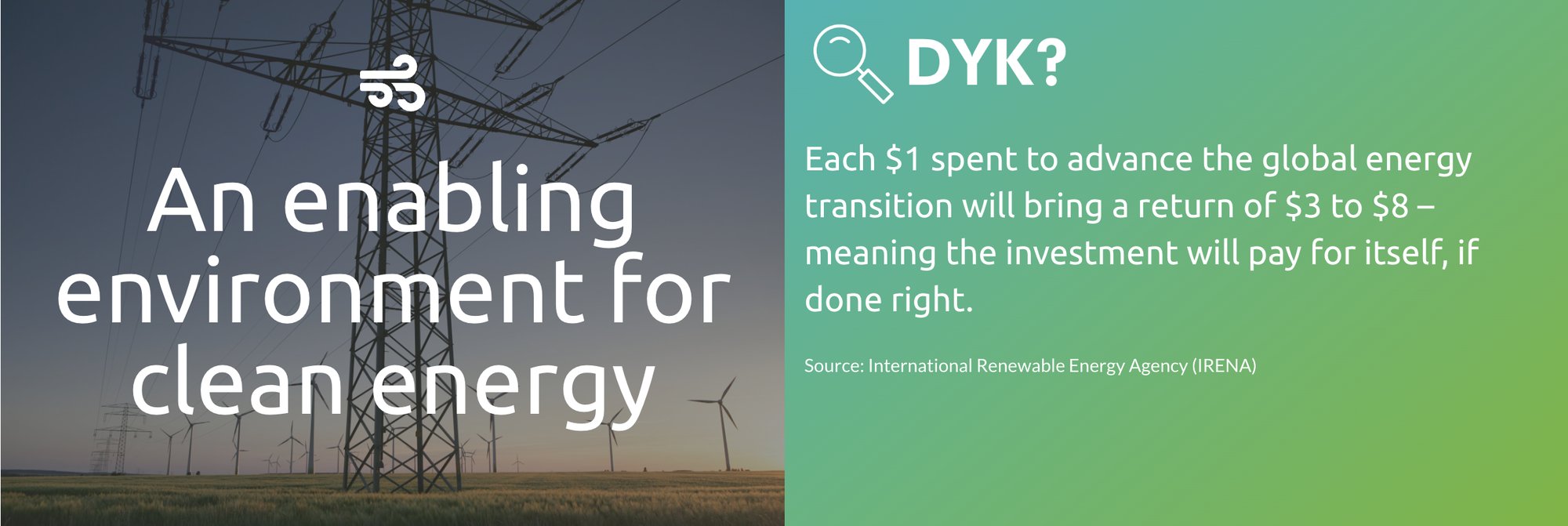
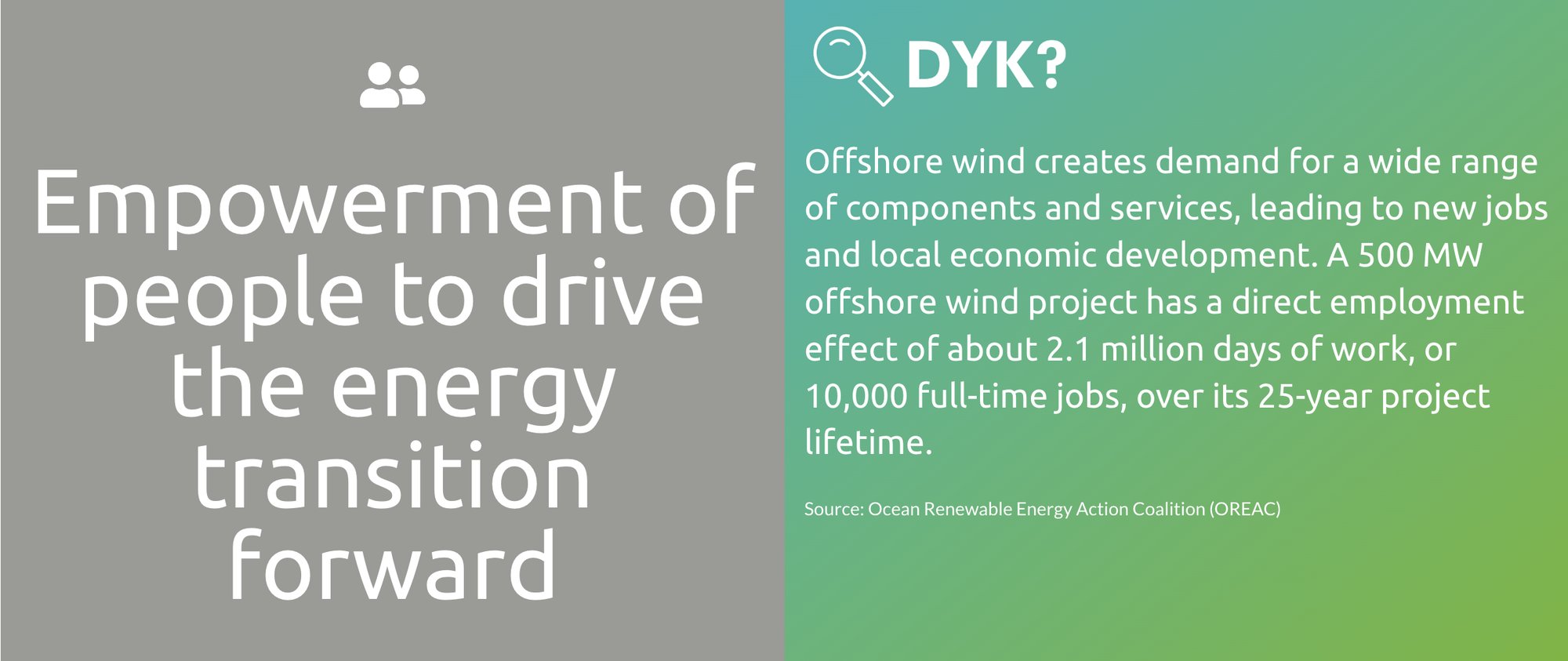
Capitalise on the enormous potential for the wind energy industry to create direct and indirect jobs by prioritising renewable energy for investment.
Re-skill workers who may be dislocated from sectors with a declining business case for employment in a growing sector like offshore wind.
Commit to a just and inclusive energy transition by ensuring that recovery plans focus on equitable distribution of resources, training and skills development across genders, minority groups and marginalised communities.
Maintain health and safety as a core pillar of wind energy and workforce planning.
‘Harness the full potential of the social and economic co-benefits of renewables and to build the skills base needed for the energy transition’ – COBENEFITS project in collaboration with the Sustainable Energy Jobs Working Group under IRENA’s Coalition for Action 2021
“Achieving a future that is sustainable and inclusive and growing is so compelling an idea that today’s leaders owe it to future generations to act immediately” – Our Future Lives and Livelihoods: Sustainable and Inclusive and Growing. McKinsey. 2021
“Changes in the energy sector must support social and economic development and improve quality of life” – People Centred Transitions, IEA, 2021
Encourage ‘meaningful and equal participation of women in climate action’ – Glasgow Climate Pact, UNFCCC, 2021
South Korea’s Green New Deal, introduced in 2020, commits around US$61 billion to boost wind and renewable energy capacity and expand the green mobility sector by 2025.
In December 2020, the Global Wind Organisation (GWO) and RenewableUK launched a new training programme to fast-track the transition of skilled workers from the offshore oil and gas sector to the offshore wind sector.
A 2021 study from UC Berkeley and Tsinghua University found that a faster transition to wind and renewable energy in China would result in multiplier effects, including expenditure shifting, job creation and higher economic efficiency, which could add as much as 7.5% to national GDP and 5.9% to total jobs in China by 2030 compared to business-as-usual.
Source: https://www.enerarxiv.org/page/thesis.html?id=2993; http://chinadialogue.net/en/energy/china-can-benefit-from-a-more-ambitious-2030-solar-and-wind-target/
In June 2020, the European Bank of Reconstruction and Development launched a just transition initiative to share the benefits of a green economy transition and protect vulnerable countries, regions and people from falling behind.
Source: https://www.ebrd.com/what-we-do/just-transition-initiative
The “Green Collar” portal is a new initiative set up in October 2020 that lists jobs in the environmental sector in South East Asia, from renewable energy to sustainable agriculture, to highlight opportunities for meaningful ‘green’ employment as countries try to revive economies hit hard by the coronavirus pandemic.
Source: https://greencollar.careers/
The Queensland government in Australia announced a $17 million grant as part of COVID-19 stimulus packages to establish a new “state-of-the-art” renewable energy training facility in Brisbane to provide training for 750 apprentices a year and create new green jobs.
Accelerating renewables could bring 3 million jobs to Latin America as region battles COVID-19. The International Renewable Energy Agency (IRENA) and the Latin American Energy Organization (OLADE) will boost ties to put the renewables driven energy transformation at the heart of Latin America and the Caribbean’s economic recovery following the COVID-19 outbreak.
“Wind can power 3.3 million jobs over the next five years.” GWEC. 2021.
“Restore progress towards attaining the Sustainable Development Goals: A human-centred approach to building back better.” International Labour Organization. 2020.
“SDG Business Hub” WBCSD.
“How a just transition can speed the race to net zero.” Nick Robins. UNFCCC Race to Zero. October 2020.
“Post-COVID recovery: An agenda for resilience, development and equality.” IRENA. June 2020.
“Power of Our Ocean”. Ocean Renewable Energy Action Coalition. December 2020.
“Making the green recovery work for jobs, income and growth”. OECD. October 2020.
“Best Practices for Gender Diversity in Talent Recruitment”. Women in Wind Global Leadership Program. September 2020.
Spread the word about how wind power can support a #GreenRecovery!