

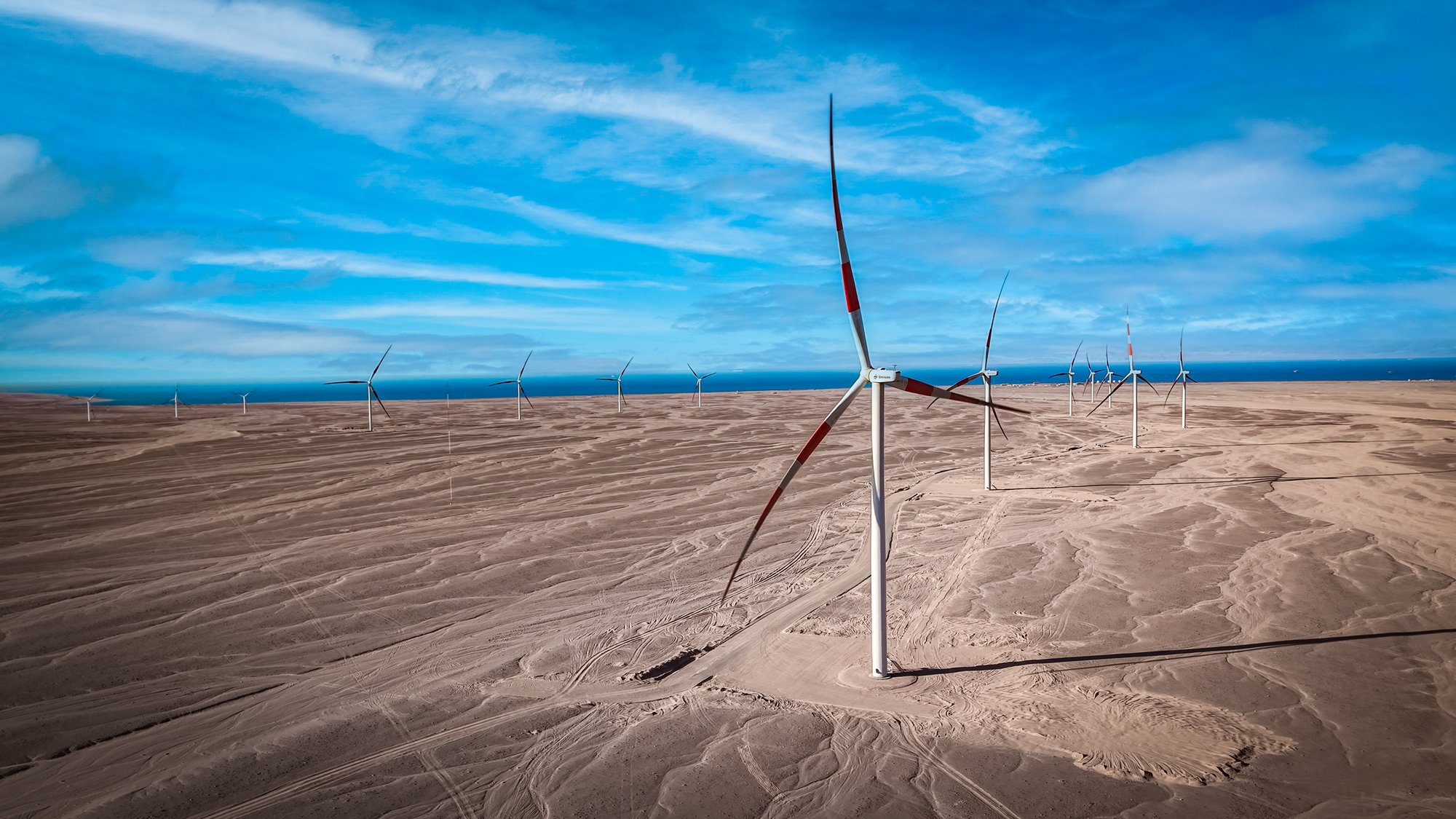
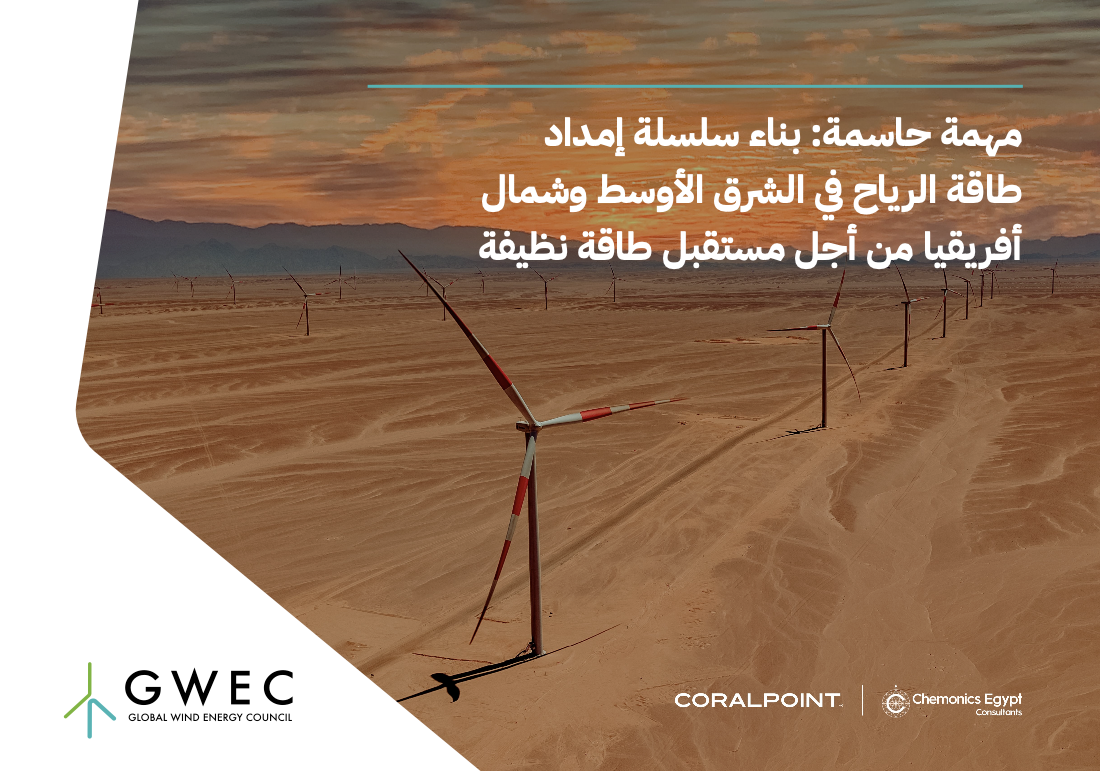
MENA's growing wind market presents a major opportunity to localise manufacturing, attract investment and strengthen energy security.
Overview
The Middle East and North Africa is poised to become a major wind energy growth region, with onshore wind capacity forecast to increase more than fivefold by 2035 under the baseline scenario.
As countries work to diversify economies, strengthen energy security and accelerate renewable energy deployment, the opportunity extends beyond power generation to the development of a competitive regional manufacturing and supply chain ecosystem.
This report examines how Egypt, Saudi Arabia, Morocco and Oman, which together account for 96% of forecast regional wind capacity additions through 2035, can leverage their complementary strengths to create a world-class wind energy supply chain.
It identifies priority manufacturing opportunities, investment needs, policy frameworks and regional cooperation pathways that can unlock industrial growth, job creation and long-term economic value across MENA.
Key Highlights
-
MENA's wind market is entering a period of significant growth
The region's cumulative onshore wind capacity is forecast to reach 40.5 GW by 2035 under the baseline scenario, creating a substantial platform for industrial development and supply chain investment.
Egypt, Saudi Arabia, Morocco and Oman are expected to deliver 96% of new wind installations between 2026 and 2035, making them the key markets for manufacturing and investment strategies.
-
Local manufacturing opportunities already exist
The strongest current opportunities are in blades, towers and foundations, supported by existing industrial capabilities in steel fabrication, electrical equipment, composites, construction and logistics.
-
Regional cooperation can accelerate supply chain development
Rather than duplicating manufacturing capabilities across countries, MENA can build a more competitive supply chain by leveraging complementary national strengths and creating coordinated regional sourcing networks.
-
The investment opportunity is substantial
Addressing projected component supply gaps could require between USD 505 million and USD 924 million in manufacturing investment under the baseline scenario, with significantly larger opportunities under accelerated growth pathways.

Media Inquiries
Alex Bath
Communications Director
-

alex.bath@gwec.net