
Workforce readiness must be elevated to the same priority level as supply chain investment, permitting reform and grid development.
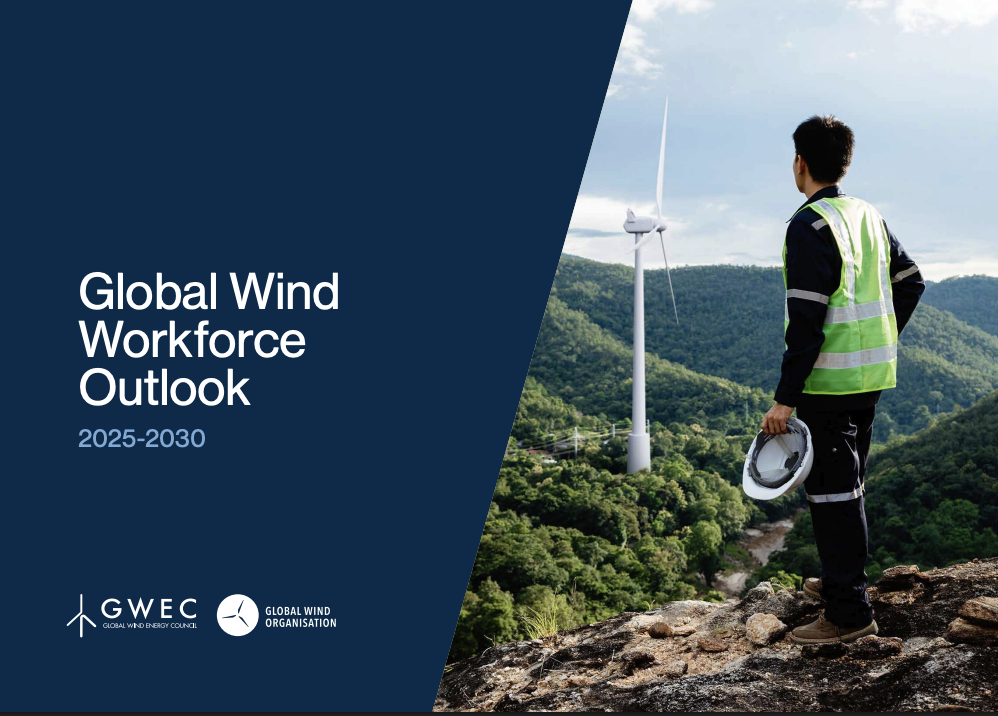
4 December, 2026 | Global Wind Organisation (GWO) and the Global Wind Energy Council (GWEC) have published their latest joint report, the Global Wind Workforce Outlook (GWWO) 2025–2030, forecasting the number of wind technicians required in the Construction & Installation (C&I) and Operations & Maintenance (O&M) segments of the world’s wind fleet. The report highlights that demand for these skilled professionals will increase by around 50% in the five year period. The report also outlines strategies to address workforce gaps arising from the substantial growth in demand for new entrants to the industry.
Scaling up the global wind workforce for C&I and O&M can take up to a decade, whether through training and deploying sufficient volumes of technicians or by improving retention of the existing workforce. Maintaining pace with the expansion of the world’s expected 2.1TW wind fleet highlights urgent questions for the industry regarding talent availability, skill development and workforce readiness.
"With the GWWO now in its sixth edition, the focus on the people who power the energy transition remains central to meeting the growing demand for skilled professionals. Local workforce readiness is often overlooked in energy transition planning. To create resilient supply chains of wind technicians, we encourage governments to engage with the industry in workforce mapping, invest in capacity development and knowledge transfer and ensure sustained stakeholder engagement. People need clarity on the roles available to them, and the industry needs a skilled workforce to support the energy transition.”
Jakob Lau Holst, CEO, GWO
“The sixth Global Wind Workforce Outlook highlights a key area of the energy transition: the growing demand for skilled professionals. Delivering on the potential of wind energy requires building a new workforce for a new era of clean energy. There must be urgent action to address the workforce shortage and scale up installation capability, with collaboration between government and industry crucial to delivering on this.”
“The next five years will see the world pass the two terawatts of wind capacity milestone. As countries intensify their efforts to meet their 2030 wind targets, it is critical that the industry rises to the challenge and ensures a new skilled workforce can deliver the full potential of onshore and offshore wind energy.”
Ben Backwell, CEO, Global Wind Energy Council
“We welcome the findings of this report. Delivering the next phase of global growth will require a broader and far more coordinated approach to developing talent. Competence standards must evolve across a wider range of roles, and entry pathways must become faster and more accessible, especially in regions with high potential but limited training infrastructure.”
Matt Riding, Chief Commercial Officer, Atlas Nextwave - Lead Sponsor
The report includes detailed profiles of six key countries, including Australia, Brazil, France, Germany, India and the USA, highlighting actions to improve workforce preparedness. Across all focus markets, addressing technician shortages, enabling training capacity and improving retention are essential to meeting local market needs.
Key Insights
How many people will be needed in the C&I and O&M segments of the global wind fleet?
By 2030, around 628,000 technicians will be required to support the growing demand for wind energy, reflecting the sector’s projected growth over the next five years.
What is the gap between current workforce numbers and project needs, and what are the consequences?
The Outlook’s model finds demand in 2025 is for around 475,000 technicians. Scaling the wind workforce can take up to ten years, meaning delays in training and deployment of qualified technicians. Employers will need to manage with labour shortages and under-skilled candidates during the forecast period.
Where are the biggest opportunities for educators and training providers?
Training efforts should focus on aligning local workforce readiness with regional and national frameworks, ensuring candidates have access to the necessary skills and information about available roles. The six country profiles highlight tailored strategies to build local capacity and foster a resilient workforce, in line with varying market needs.
Does this forecast encompass all workforce needs in the wind sector?
Similar to previous editions, GWWO focuses on C&I and O&M segments. Workforce demands in other areas, such as R&D, Procurement, Manufacturing, Logistics, and Decommissioning, are not included, meaning overall workforce needs for achieving net-zero objectives are even higher.
About GWO
Global Wind Organisation is a non-profit industry association founded and owned by its members who are drawn from globally leading renewable energy manufacturers, owners and operators. Our members strive for an injury free work environment, setting common international standards for safety training and workforce development. Since 2012, GWO training standards have become widely adopted by wind industry employers, seeking quality, safety and reassurance for their technicians in construction, installation, operations and maintenance around the world. Today, more than 190,000 technicians are trained according to GWO standards.
About GWEC
GWEC is a member-based organisation that represents the entire wind energy sector. The members of GWEC represent over 1,500 companies, organisations and institutions in more than 80 countries, including manufacturers, developers, component suppliers, research institutes, national wind and renewables associations, electricity providers, finance and insurance companies.

Alexander Bath
Communications Director-

alex.bath@gwec.net

Sara Bastholm
Head of Communication-
sb@globalwindsafety.org
Share article:


Related articles
14 May, 2026
GWEC records sharp rise in wind turbine installations, as five OEMs exceed 100 GW

18 September, 2026